Showing posts with label Amazing Librarian. Show all posts

Monday, 1 January 2024

Building on the 7 Habits of Highly Effective Librarians

The concept of the "7 Habits of Highly Effective Librarians" is inspired by Stephen R. Covey's influential book "The 7 Habits of Highly Effective People." While there isn't a universally recognized set of "7 habits" specifically tailored for librarians, many professionals in the library field have adapted and applied Covey's principles to their roles. Here's an adaptation that reflects the qualities and practices often associated with effective librarians:

1. Be Proactive:

  • Take Initiative: Actively seek opportunities to enhance library services and address patrons' needs.
  • Anticipate Needs: Proactively identify potential challenges and develop solutions to ensure smooth operations.

2. Begin with the End in Mind:

  • Set Goals: Establish clear goals and objectives for library programs, services, and initiatives.
  • Vision and Mission: Align actions with the library's mission and vision, focusing on long-term impact and sustainability.

3. Put First Things First:

  • Prioritize Tasks: Focus on activities that align with strategic priorities and deliver the most significant impact.
  • Time Management: Allocate time effectively, balancing daily responsibilities with long-term projects and professional development.

4. Think Win-Win:

  • Collaborate: Foster collaborative relationships with colleagues, patrons, and community partners, emphasizing mutual benefits and shared goals.
  • Negotiate Effectively: Seek solutions that meet the needs of all parties involved, promoting cooperation and positive outcomes.

5. Seek First to Understand, Then to Be Understood:

  • Active Listening: Listen attentively to patrons' concerns, feedback, and information needs, demonstrating empathy and understanding.
  • Effective Communication: Communicate clearly and respectfully, ensuring that information is conveyed accurately and comprehensively.

6. Synergize:

  • Teamwork: Encourage teamwork and collaboration among library staff, leveraging diverse skills and perspectives to achieve common goals.
  • Partnerships: Build partnerships with other organizations, institutions, and stakeholders to enhance library services and community engagement.

7. Sharpen the Saw:

  • Continuous Learning: Invest in professional development, staying informed about emerging trends, technologies, and best practices in library science.
  • Self-Care: Prioritize personal well-being and work-life balance, recognizing the importance of self-care in sustaining long-term effectiveness and resilience.

While these habits provide a framework for excellence in librarianship, it's essential to adapt and personalize them to fit individual strengths, organizational contexts, and evolving professional landscapes. By embodying these principles, librarians can cultivate a culture of excellence, innovation, and service that benefits patrons, communities, and the broader field of library and information science.

Sunday, 19 November 2023

Librarian's Role in Copyright Protection

Librarians play a crucial role in copyright protection by educating users about copyright law, promoting fair use principles, and developing policies and procedures to ensure compliance with copyright regulations. Here's a detailed breakdown of their responsibilities:

  1. Educating Users about Copyright Law: Librarians raise awareness about copyright law and its implications for users. They provide clear explanations of copyright concepts, such as exclusive rights, ownership, and limitations, to help users understand the legal framework surrounding copyrighted works.

  2. Promoting Fair Use Principles: Librarians advocate for fair use, a legal doctrine that allows for limited use of copyrighted material without permission from the copyright holder. They explain the four Fair Use factors and help users determine when their use of copyrighted material falls within the boundaries of fair use.

  3. Developing Copyright Policies: Librarians establish clear copyright policies for their institutions, outlining guidelines for the use of copyrighted materials within the library's facilities and resources. These policies address issues such as copying, digitization, and distribution of copyrighted works.

  4. Enforcing Copyright Compliance: Librarians ensure that library staff and users adhere to copyright regulations. They monitor activities such as photocopying, scanning, and electronic distribution of copyrighted materials to prevent unauthorized use.

  5. Providing Copyright Guidance: Librarians offer guidance to patrons on copyright-related questions and concerns. They advise users on obtaining copyright permissions, navigating licensing agreements, and avoiding copyright infringement.

  6. Addressing Copyright Infringement: Librarians handle instances of copyright infringement within the library's domain. They may educate users about their infringement, remove infringing materials, or take appropriate disciplinary action.

  7. Collaborating with Copyright Holders: Librarians maintain positive relationships with copyright holders, such as publishers, authors, and producers. They engage in dialogue and negotiations to facilitate access to copyrighted materials while respecting intellectual property rights.

  8. Staying Informed about Copyright Developments: Librarians keep abreast of evolving copyright laws and court rulings to ensure that their policies and practices remain compliant. They attend workshops, conferences, and seminars to stay updated on copyright issues.

  9. Advocating for Balanced Copyright Laws: Librarians advocate for copyright laws that strike a balance between protecting intellectual property and enabling access to information and knowledge. They engage with policymakers to promote fair and equitable copyright frameworks.

  10. Promoting Open Access: Librarians support open access initiatives, which make scholarly and other research freely available to the public. They promote open access journals and repositories, and they educate users about the benefits of open access.

Through these efforts, librarians play a critical role in upholding copyright principles, ensuring responsible use of copyrighted materials, and promoting a balanced approach to intellectual property protection.

Saturday, 18 November 2023

Role of Librarians in promoting library services

Librarians play a crucial role in promoting library services and ensuring that users are aware of the vast array of resources available to them. They act as intermediaries between the library's collections and its patrons, helping users find the information they need and navigate the ever-changing landscape of information resources.

Here are some of the specific ways in which librarians promote library services:

  1. Developing and implementing marketing and outreach strategies: Librarians create and execute marketing campaigns to raise awareness of library services and attract new users. They may use a variety of channels to reach their target audience, such as social media, email marketing, and print and online advertising.

  2. Providing customer service and support: Librarians are the front line of customer service in libraries. They answer questions, provide assistance with research, and troubleshoot technical problems. They also offer guidance on how to use library resources effectively.

  3. Teaching information literacy skills: Librarians teach users how to find, evaluate, and use information effectively. They may offer workshops, classes, and online tutorials on a variety of topics, such as conducting research, using online databases, and avoiding plagiarism.

  4. Curating and promoting library collections: Librarians select and organize materials for the library's collections. They also promote these collections through displays, book clubs, and other events.

  5. Building relationships with the community: Librarians engage with the community by participating in local events, partnering with schools and businesses, and serving on community boards. They also work to make the library a welcoming and inclusive space for all.

  6. Advocating for library funding: Librarians advocate for library funding by speaking to elected officials, writing letters to the editor, and participating in public hearings. They also educate the public about the value of libraries.

  7. Keeping up with emerging technologies: Librarians stay up-to-date on the latest technologies and trends in order to provide users with the best possible service. They may experiment with new technologies and offer training to users on how to use them.

  8. Promoting open access: Librarians support open access initiatives, which make scholarly and other research freely available to the public. They may create and manage institutional repositories and advocate for open access policies.

  9. Copyright education: Librarians teach users about copyright law and how to use copyrighted materials legally. They also help users navigate the complex world of copyright permissions.

  10. Promoting digital literacy: Librarians teach users how to use digital tools effectively and safely. They may offer workshops on topics such as online privacy, social media etiquette, and cybersecurity.

By carrying out these activities, librarians play a vital role in promoting library services and ensuring that users have access to the information and resources they need to succeed in their academic, personal, and professional lives.

Wednesday, 8 November 2023

Checklist for Closing the Library for Vacation / Break

Diwali is round the corner and all of us are looking forward to meeting deadlines at our workplaces. With only two more days to enjoy the festive season, do you think you will forget very important "To-Dos". Although most of the libraries would allow their patrons to use it for studying purposes, here's a checklist for you to go through before the library closure:

Infrastructure and Equipments:

1) Turn Off all the lights, fans, Air Conditioners

2) Check all the cameras / CCTVs (Switch on / off as per your Institute's policy)

3) Arrange all the chairs and tables

4) Clear all the dustbins

5) Check the washrooms (if inside the library)

6) Switch off all the computers, printers, scanners, barcode readers, display systems

7) Switch off all the Wi-Fi routers (again depending upon your Institute's policy)


Administrative:

1) Mark your Calendars for planned / proposed meetings (and I actually mean "mark it in your wall hanging calendar)

2) Schedule the above meetings as a reminder using your Gmail.

3) Draft agendas for the next two library meetings

4) Update all existing Book Count Records on all notice boards, website etc.

5) Check and verify all the Issued Books till 10/11/2023. It may so happen that books are returned but were not recorded in the software. Verifying always helps save the day.

6) Most importantly: post a message that library would be closed during.....

7) Make it a point to call all those patrons with overdues one day before the library closes for any vacation. This gives genuine patrons some time to return / reissue their books.

8) Prepare the list of journals for the next year. Give a call for quotations.

9) Write down which work you wish to continue / begin afresh after this vacation. It helps..try it out!

10) Spend quality time with your colleagues and ask them for improvisations in the library set up, circulation counter, books, any other. They will be elated to know that their opinion is being considered. 

Monday, 1 March 2021

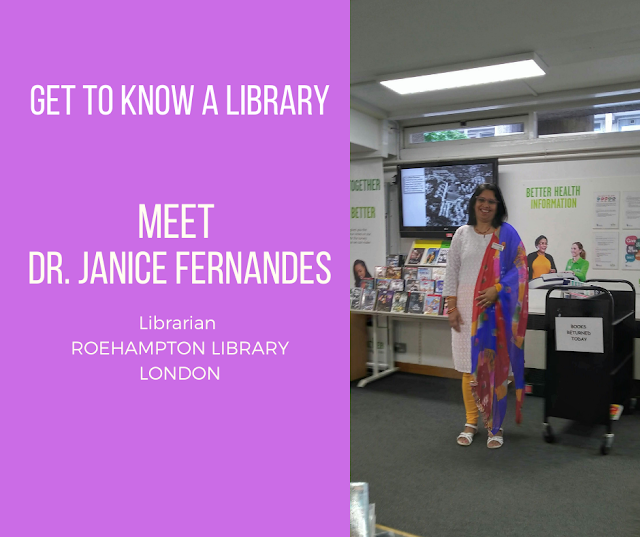
Get to Know a Library: Meet Dr. Janice Fernandes #2

Get to Know a Library

Roehampton Library is a public library nestled in the local communities and caters to a wide
and diverse range of customers from Putney , Roehampton and Barnes.
The library welcomes toddlers, little children , school and college goers , students from the
University of Roehampton, adults and older residents in the true spirit of equality and
diversity. We also welcome the physically and mentally challenged and strive to make their
visits comfortable, fruitful ad satisfactory.
Various events and activities carefully planned and implemented by Roehampton Library all
through the year both in the physical space as well as in the digital environment are focussed
on community participation, skill building, leisure and entertainment and knowledge growth
and sharing.
Below is a brief overview of the events and activities undertaken at Roehampton Library -
1. The need and importance of sing and reading to children and with children can never be
over emphasised. The correct tone, pronunciation, phonetics and intonation helps them
build a rich vocabulary and develop a love of reading. To this end the library has weekly
Rhyme Time and Story Time sessions. Additional assistance is provided through after
school Reading Support Club.
2. Saturday clubs, Colouring and craft activities and Dad’s story time attract a lot of
participants. Board games like chess, scrabble, word building etc provide intellectual
stimulus.
Innovating Libraries: Roehampton Library, London


3. Summer Reading Challenge is initiated every year at the beginning of the summer
holidays. Every attendee has to read 6 books and talk about them. Stickers, prizes and
medals are awarded.
4. Various schools and nurseries in the surrounding area bring children to the library for
Class visits, story telling, curriculum support and book selection. This is implemented
with the school literacy co-ordinator so that a properly structured timetable is in place.
5. Various after school club activities like Coding Club, Science Club, Homework Club
etc. are in place during term time.
6. The library successfully organises ESOL classes (English for Speakers of Other
Languages) The duration of the courses is generally 72-84 hours with examinations and
certification at the end. English conversation classes also take place on a weekly basis.
7. Two hour public computer use is offered to library members every day. To support this
I.T. training classes and held on general as well as specific topics for the adults and
older residents.
8. Book Clubs, Reading Groups, Poetry Groups and Knit and Natter Clubs are held
fortnightly. It gives the local community and opportunity to gather together, participate
and learn new ideas.
Innovating Libraries: Roehampton Library, London
9. Exhibitions, Workshops, Talks, Oral History projects, Good health and Well being
lectures are held on different occasions throughout the year.
10. The month of October is celebrated as Black History Month. Various artists, authors
and organizations visit the library though pre-planned projects, workshops and
interactive sessions.
11. Special events are organised for special days like Holocaust Memorial Day, Poppy Day,
Library Week, Term Breaks and Festival days.
12. The library offers its space, furniture, computers and resources to any organization or
individual who might want to run an event for the good of the community.
13. Local councillors and MPs use the library space to interact with residents every Saturday.

Dr. Janice Fernandes is a Librarian with Roehampton Library, London for the past three years. She has been proactive in Information Literacy sessions as she feels customer service is the core of any library. She is gifted with excellent communication and presentation skills. As such she is constantly upskilling herself and her library users with team building activities.


Note: All the photos included in this blog post have the copyright of Roehampton Library, London.

Cite as:
Bhange, C. (2021). Get to Know a Library: Roehampton Public Library [Blog]. Retrieved from https://chinmayeebhange.blogspot.com/2021/03/get-to-know-library-meet-dr-janice.html

Thursday, 18 February 2021

DSpace for academic libraries - Part 1


Chinmayee Bhange

DSpace is an Open Source Software package which is most commonly used by institutions to archive and make accessible scholarly content created or generated by the institute. The content may range from born digital items to scanned copies.

It was released in the November of 2002 by Duraspace. Currently, it has version 6.3 ready for download using GitHub. It uses JAVA for programming. For more details, please visit https://duraspace.org/dspace/


DSpace is a repository making software which is freely available for download and customization. It is used to collect and preserve the published articles, white papers, working papers, reports, data sets, edited books and such other scholarly content of the institute in one place.

The various sections or topics in DSpace are referred to as a Community. A Community has sub-communities. So, for example, a community can be the Department of Computer Science. The Sub- Community under this Community can be Books, Journal Articles, etc.

Essentially, a Community is the broad group which can be further categorised as per the need or ease of retrieval.

These Communities have e people and e groups who are the admin or super admin of the groups. Which means they have the right to upload data (content) and allow or dis-allow access to specific people or user groups. This is the Administrator – Control interface.

In SFIT LIRC, we have been DSpace for many years now. Based on the need and intended use, we have created the following communities in our DSpace@SFIT.

Creating Community:

        Each DSpace unit (or service) which we want to group together is comprised of Communities – the highest level of the Dspace content hierarchy

        Communities may be:

        Departments

        Labs   

        Research Centres

        Schools

        Each community contains descriptive metadata about itself and the collections contained within it

        Every community in turn have collections which contain items or files and contains Descriptive Metadata

Example from our LIRC at St.Francis Institute of Technology

Community

Sub-Community

Collection

Items

Approved Lists

Journals

UGC CARE

List 1


SCIMAGO Journal and Country Rankings

List 1


Example for any library to start with:

Community

Sub-Community

Collection

Items

Name of the Department

Publications

Books, Journals, Conference Proceedings

Soft Copies of Books, Journals, Conference Proceedings. Make sure you have the copyright to upload material!


Projects

Sponsored by Institute

Grants from GOI

Grants from AICTE

Working Papers, Models and Final Completion Certificates


1.     Sign in to DSPace using Administrator login

2.     Determine a name for your Top Level Community

3.     Go to “Communities and Collections”

4.     Click on “Create Community”

5.     Provide the required Metadata for your Community

6.     Set proper Authorization hierarchy or Access Rights

7.     Click on “Create”

8.     You can edit your Community and metadata at this stage too

9.     After editing, do not forget to click on “Update”

References:

https://www.ohiolink.edu/sites/default/files/uploads/CreateCommunities.pdf


An introduction to DSpace - ScholarSpace

scholarspace.manoa.hawaii.edu › bitstream › Module 3 .


Monday, 15 February 2021

RDMLA Course for librarians from Elsevier


The RDMLA consists of eight self-paced, asynchronous units that focus on the knowledge and skills needed to collaborate with researchers and other stakeholders on data management. The content has been thoughtfully designed to be practical and easily applied to a librarian’s daily data management workflow.

The eight units include:

  • Foundations of Research Data Management (RDM)
  • Navigating Research Culture
  • Advocating for RDM in Libraries
  • Launching Data Services
  • Project Management and Assessment
  • Data Analysis and Visualization Tools (R and Tableau)
  • Overview of Coding Tools (Python and Jupyter Notebooks)
  • Overview of Platform Tools (OSF, Figshare, Mendeley Data, and others

For more details, please visit:

https://www.elsevier.com/connect/library-connect/rdmla-free-training-course-for-librarians-now-offers-the-opportunity-to-earn-ce-credits